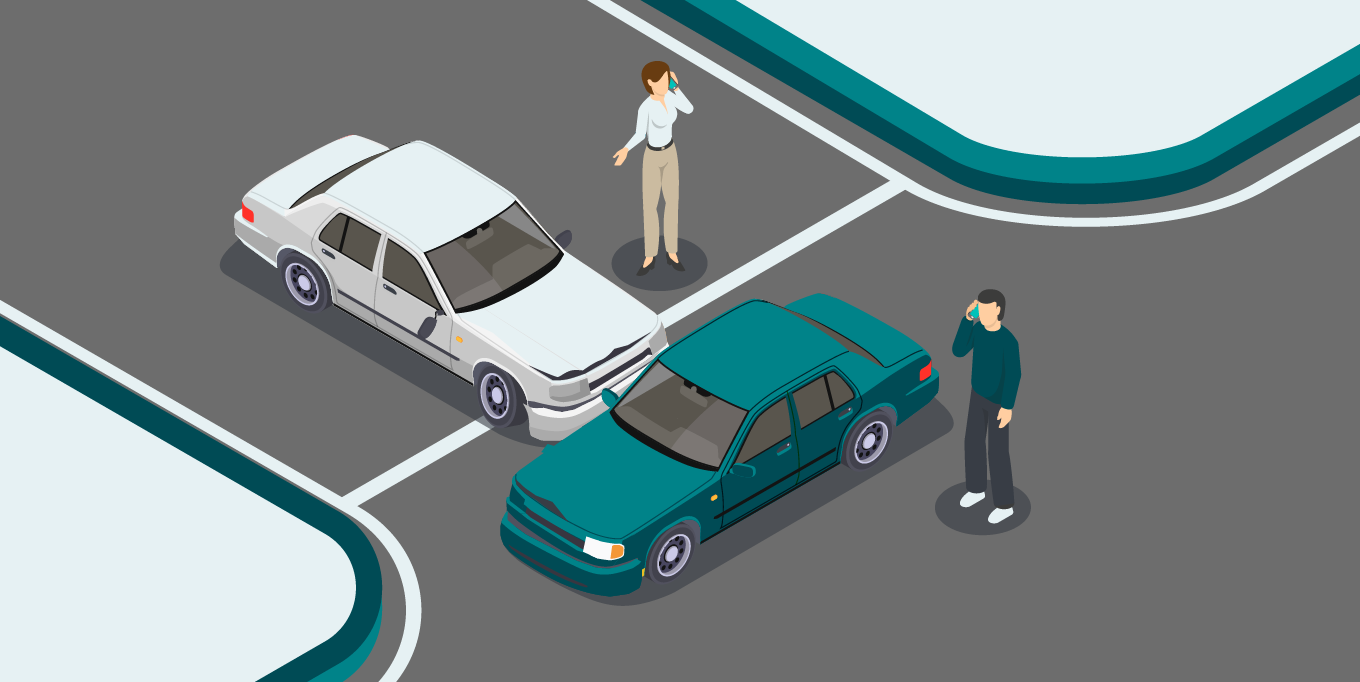
Every year, thousands of Halifax residents are involved in vehicle collisions, and the consequences can be life-changing. According to data analyzed by The Signal, over 44,000 collisions occurred on HRM’s public roads between 2018 and 2025, resulting in 100 deaths and countless serious injuries. Pedestrians, cyclists, and drivers alike face real risks on Halifax streets, with crash rates still well above the city’s own safety targets.
If you or a loved one has been injured in a car accident in Halifax, you deserve experienced legal representation to protect your rights and pursue the compensation you’re entitled to. Our Halifax car accident lawyers are here to help.
What to Do After a Car Accident in Halifax, Nova Scotia
After a car accident in Nova Scotia, your first priority is safety. Once everyone is out of danger, take the following steps to protect your health, your rights, and any potential insurance claim:
Ensure safety and call for help
Check for injuries and call 911 if anyone is hurt or the scene is unsafe. If possible, move vehicles out of traffic and turn on hazard lights to prevent further accidents.
Exchange information
Trade contact and insurance details with the other driver(s) involved, including names, phone numbers, license plate numbers, and insurance policy numbers. This information is crucial for filing insurance claims.
Gather evidence
If you can, take photos of the vehicles, the overall scene, and any visible injuries. Note the time, location, and road conditions. If there are witnesses, get their names and contact info. These details can help establish what happened and who was at fault.
Report the accident to police
In Nova Scotia, accidents that cause any injury or over $2,000 in property damage must be reported to law enforcement. Even for minor fender-benders, it’s wise to have a police report for an official, unbiased record of the incident.
Notify your insurance company
Contact your auto insurer as soon as possible to report the collision. Provide them with the basic facts. Prompt notification is often required by insurance policies and it ensures you can access benefits like vehicle repairs and medical coverage.
Seek medical attention
See a doctor as soon as you can, even if you feel fine. Some car accident injuries (like whiplash or concussions) may not show symptoms right away. A medical exam protects your health and creates a record of any injuries in case you pursue a claim.
The moments after a crash can be overwhelming, but following these steps will help protect you both medically and legally. If you’re unsure about the next steps or feeling stressed, our car accident lawyers are here to support you. Contact us for a free consultation.
Do I Need to Report the Accident in Halifax?
Should I Call the Police After a Motor Vehicle Accident?
In Halifax, you are legally required to report a car accident to the police if anyone is injured or if the property damage exceeds $2,000. This means that for most moderate or serious collisions – especially where people are hurt – calling the police is a must. The police will come to the scene, ensure safety, and create an official accident report.
If the accident is minor with no injuries and very little damage, you might not be legally required to call the police to the scene. However, it’s often still a good idea to report the accident even if it seems small. For one, damage estimates can be tricky – what looks minor could end up costing more than $2,000 in repairs. Also, some injuries (like whiplash or a mild concussion) might not be obvious immediately. Having a police report on file can protect you if medical issues or disputes about the accident arise later on. An official report serves as neutral documentation of what happened, which can be very helpful if you need to make an insurance claim or if the other driver’s story changes.
When and Why I Must Report a Car Accident to Your Insurance in Halifax?
Besides reporting to the police, you also need to report the accident to your insurance company promptly. All insurance policies require you to notify them of an accident within a certain time frame. Even if the collision was minor and wasn’t your fault, let your insurer know what happened. Failing to report to your insurer could affect your coverage. When you report to the insurance company, just stick to the facts of what occurred.
In summary, report the accident to police whenever the law requires it or if you have any doubt about injuries or damage. It’s better to be safe and have the incident documented. And always inform your insurance provider as soon as possible. If you’re unclear about your obligations after a crash, or if the situation is complicated, our legal team can provide guidance. Contact us for a free consultation.
Suing After A Car Accident in Halifax, NS
Our team of top rated Halifax personal injury lawyers have been helping people across Nova Scotia involved in motor vehicle accidents receive fair compensation for their injuries for 30 years.
Insurance companies make money by paying out as little as possible in claims. The first offer made is not always the best, and the claim is often undervalued. While the legal process can take time, building a strong case and the threat of courtroom litigation can compel an insurance company to offer a fair settlement. In fact, most cases settle outside of court. Furthermore, an experienced personal injury lawyer will argue in your favour for eligible damages the insurance company may otherwise never acknowledge.
Our legal team will help you understand how motor vehicle insurance works, what the steps in the legal process are, and what kinds of benefits are available to you. And, if you’re not receiving the benefits you’re entitled to, then we will step in and fight for you.
We recommend speaking with an experienced personal injury lawyer who can provide you with information specific to your situation. Contact us today for a free consultation.
How Long Do I have to File a Car Accident Lawsuit in Halifax?
Time is of the essence when you’ve been involved in a motor vehicle accident. Engaging a lawyer promptly after an accident helps ensure that evidence from the scene of the accident, witness statements, and other time-sensitive support for your case is preserved.
In general, you have two years from the date of the accident to file a motor vehicle accident claim in Nova Scotia, although there are exceptions. There are also other time limits that apply to no-fault claims under your Section B insurance.
If you wait too long, you may lose your right to sue the at-fault driver. We recommend that you engage an accident lawyer as soon as possible to secure your right to compensation.
Timeline of a Car Accident Claim in Halifax
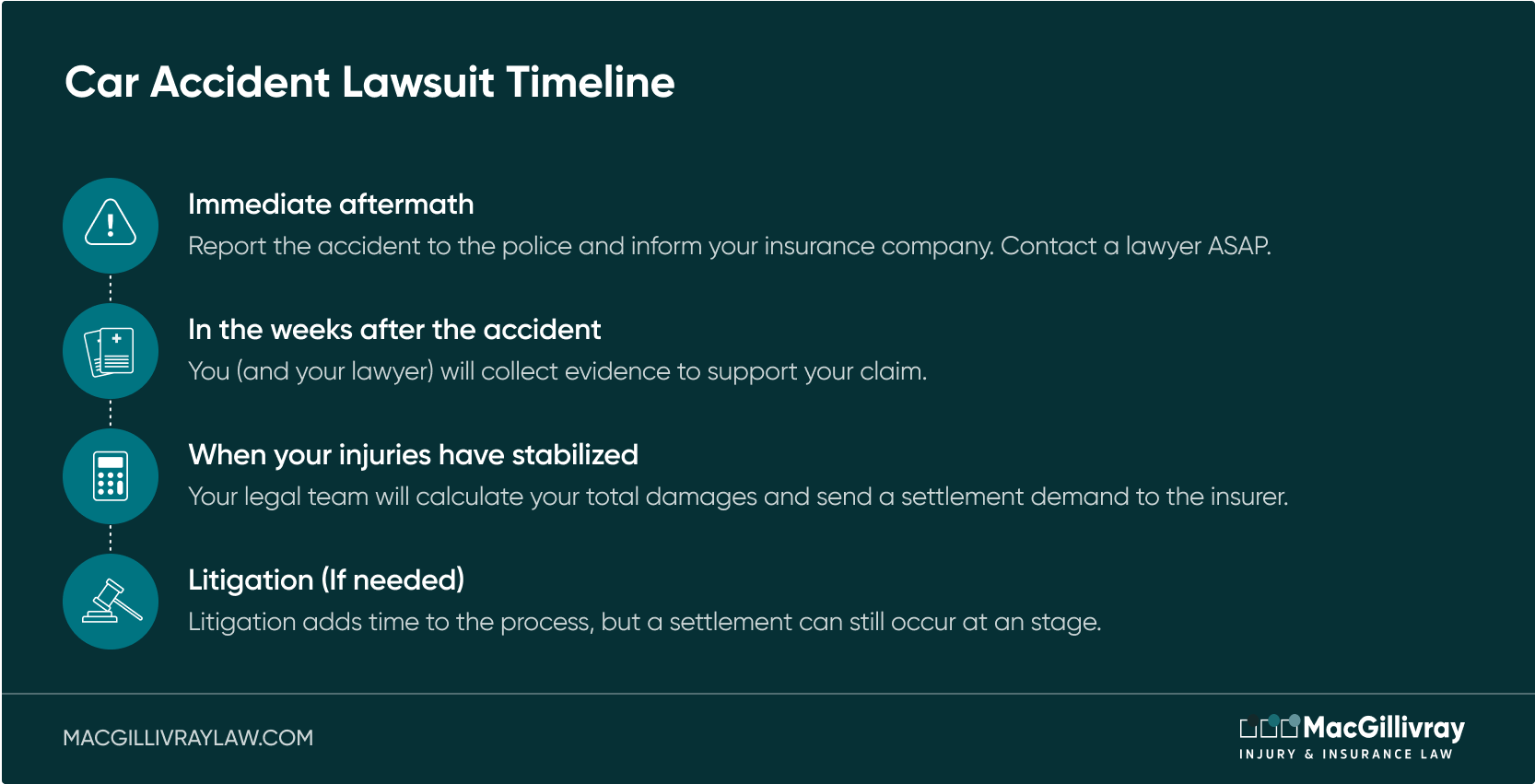
Every car accident claim in Halifax is unique, but most follow similar stages to reach a resolution. Here’s an overview of a typical claim timeline:
Ensure safety and call for help: Check for injuries and call 911 if anyone is hurt or the scene is unsafe. If possible, move vehicles out of traffic and turn on hazard lights to prevent further accidents.
Exchange information: Trade contact and insurance details with the other driver(s) involved, including names, phone numbers, license plate numbers, and insurance policy numbers. This information is crucial for filing insurance claims.
Gather evidence: If you can, take photos of the vehicles, the overall scene, and any visible injuries. Note the time, location, and road conditions. If there are witnesses, get their names and contact info. These details can help establish what happened and who was at fault.
Report the accident to police: In Nova Scotia, accidents that cause any injury or over $2,000 in property damage must be reported to law enforcement. Even for minor fender-benders, it’s wise to have a police report for an official, unbiased record of the incident.
Notify your insurance company: Contact your auto insurer as soon as possible to report the collision. Provide them with the basic facts. Prompt notification is often required by insurance policies and it ensures you can access benefits like vehicle repairs and medical coverage.
Seek medical attention: See a doctor as soon as you can, even if you feel fine. Some car accident injuries (like whiplash or concussions) may not show symptoms right away. A medical exam protects your health and creates a record of any injuries in case you pursue a claim.
Overall, a car accident claim can resolve in a few months or take a few years, depending on factors like the complexity of the case and whether a lawsuit is required. Throughout this process, an experienced Halifax car accident lawyer will keep things on track and fight for your rights while you focus on recovery. Our team works to resolve claims efficiently while maximizing the compensation you receive. Contact us for a free consultation.
How Much Is My Car Accident Claim Worth?
A claim’s value is based on many factors. These factors fall into legal categories called “heads of damages” that set out the types of damages that may be recoverable in a lawsuit.
The severity of your injuries is a major factor in valuing your claim. Our clients’ injuries range in severity, from whiplash and soft-tissue injuries, to broken and fractured bones, to more severe injuries such as traumatic brain injuries, paraplegia and quadriplegia. We also help people who suffer from chronic pain and psychological injuries such as PTSD.
You may also have access to Section B insurance benefits following an accident. These benefits are paid by your own insurer in the event of a motor vehicle accident, and cover reasonable and necessary treatment costs, as well as some other associated costs, regardless of who is at fault for the accident.
When you’ve been injured in a car accident, Section B insurance provides up to $50,000 in coverage for medical and rehabilitation expenses, such as physiotherapy, massage, chiropractic, and nursing care. If you’re unable to work due to your accident injuries, Section B provides coverage towards your lost wages up to a maximum of $250 per week. If you’re unable to perform household duties due to your accident injuries, Section B insurance provides $100 per week in housekeeping benefits for up to 52 weeks. In the event of a death of a loved one, Section B provides up to $2,500 in funeral expenses and death benefits up to $25,000.
Like each person, each case is unique. The best way to learn the value of your claim is to contact an experienced personal injury lawyer who can ensure you receive fair compensation.
What If My Car Accident Injuries Show Up Days or Weeks Later?
It’s completely normal for car accident injuries to appear well after the crash itself. In the immediate aftermath, adrenaline and shock can mask pain — so you might feel fine at the scene, only to wake up days later with serious neck, back, or head pain.
Herniated discs: pain and nerve symptoms may develop gradually over days or weeks.
Psychological injuries: anxiety, PTSD, and depression often surface in the weeks following a collision.
If any of these sound familiar, don’t wait. What you do next can significantly affect your health — and your claim.
What to Do If You Notice Injuries After a Car Accident
After a car accident in Nova Scotia, your first priority is safety. Once everyone is out of danger, take the following steps to protect your health, your rights, and any potential insurance claim:
See a doctor immediately.
Even if you’re days past the accident, visit a medical professional right away. Describe all new symptoms — no matter how minor they seem — and make sure they’re documented in your medical record. This creates a clear link between the accident and your injuries, which is critical for any insurance claim.
Keep detailed records
Hold onto all medical bills, diagnoses, prescriptions, and treatment notes. These documents form the backbone of your compensation claim.
Notify your insurance company
Let your insurer (and the at-fault driver’s insurer, if a claim is already in progress) know about the newly discovered injuries. Your compensation demand can be updated to reflect additional medical costs and missed work.
Don’t rush to settle
Insurers sometimes offer fast settlements shortly after an accident. Accepting too early — before you know the full extent of your injuries — can be a costly mistake. Once you sign a release, you generally cannot go back for more compensation, even if new injuries surface later.
You shouldn’t have to manage a legal claim while you’re still healing. That’s exactly what the team at MacGillivray Injury and Insurance Law is here for. Just let us know what’s changed — we’ll take it from there, keep everything up to date, and fight for every dollar your injuries deserve.
Common Types of Collisions in Halifax
As a growing city, Halifax faces issues of traffic and congestion. We represent people who have been injured in many different types of motor vehicle collisions in Halifax, including:
If you have been injured in an accident and need help determining who is at fault and what compensation you are entitled to, contact us for a free consultation. We serve clients throughout Halifax Regional Municipality from our Downtown office on West St. We can also meet by phone or virtually.
Frequently Asked Questions
Should I accept the settlement my insurance company offers me?
In general, the legal limitation period for filing a motor vehicle accident claim is two years from the date of the accident in Nova Scotia, although there are exceptions. There are other time limits that apply to no-fault claims under Section B in Atlantic Canada. At MacGillivray Law, we typically file a lawsuit against the at-fault driver one year after the date of the accident, or once your injuries have healed or the extent of your injuries can be accurately assessed.
Do I have to make a statement to my insurance company?
You’re required to report the accident to your own insurer and give them the basic facts of what happened — your policy obligates you to cooperate, often within a set time frame. You are not, however, obligated to give a recorded statement to the other driver’s insurance company, and you should be careful before doing so. Adjusters can use an early statement — made before the full extent of your injuries is known — to undervalue or deny your claim. Before giving any recorded or detailed statement, especially to the at-fault driver’s insurer, it’s wise to speak with a lawyer first.
How is fault determined in a car accident?
Fault is assessed from the evidence — police reports, witness accounts, photos, vehicle damage, and the rules of the road — together with the fault-determination rules under Nova Scotia’s Insurance Act. Fault can also be shared: under the principle of contributory negligence, more than one driver may be partly responsible, and any compensation you receive can be reduced by your share of the blame. Insurance companies make their own fault findings, but those decisions aren’t the final word — an experienced personal injury lawyer can gather evidence and challenge an assessment that unfairly places blame on you.
Can I sue if I was hurt by an uninsured driver?
Yes. If you’re injured by a driver who has no insurance, you can still pursue compensation. Standard Nova Scotia auto policies include Section D (uninsured/underinsured motorist) coverage, which can respond when the at-fault driver has no insurance — or too little to cover your losses — and you may also be able to claim against the at-fault driver directly. These claims have specific notice requirements and deadlines, so it’s important to act quickly and get legal advice.
Can I sue if I was injured in a hit and run?
Yes. Even when the driver who caused the crash flees and is never identified, you may still be entitled to compensation through the uninsured/unidentified motorist (Section D) coverage on your own policy. Reporting the hit-and-run to police as soon as possible and notifying your own insurer are critical steps that protect your right to claim. Because strict time limits and reporting rules apply, it’s best to speak with a lawyer early.
Can I sue if a loved one was killed in a car accident?
Yes. When a collision caused by another party results in a death, eligible family members may bring a claim under Nova Scotia’s Fatal Injuries Act. Depending on the circumstances, this can include compensation for loss of financial support, loss of guidance, care and companionship, funeral and related expenses, and certain bereavement damages. These are painful claims to pursue, and we handle them with care and compassion while protecting your family’s rights.
Can I sue if I was injured in an ATV, snowmobile, or boat accident?
Yes. Personal injury claims aren’t limited to car accidents. If you’ve been injured in an ATV, snowmobile, boat, or other recreational-vehicle accident because of someone else’s negligence, you may be entitled to compensation for your injuries and losses. These cases can involve different insurance policies and legal rules than a typical motor-vehicle collision, so it’s worth having an experienced injury lawyer review the specifics of what happened.
No upfront costs, no hourly rates. If we don't win your case, you owe us nothing. It's that simple.
PROCESS
We keep you in the loop, every step of the way.
We use the latest tools to manage your file and keep you updated every step of the way so you are never left in the dark.
OFFICE
We're in your corner — and in your city.
With an office on West St., plus phone and virtual consultations — we're always easy to reach.
TEAM
One call brings a whole team to your side.
From your first call, a team of staff works together on your file — focused entirely on getting you the settlement you deserve.
A car accident can turn your life upside down overnight. Between managing your recovery, dealing with insurance companies, and worrying about your finances, it's a lot to carry. At MacGillivray Law, we're here to carry it with you.
Trusted by Halifax Families When it Mattered Most.
January 2026
MacGillivray Law Office was outstanding from start to finish. They truly listened to me, did everything I asked, and were extremely knowledgeable while also being very comforting throughout the process. They always had an open-door policy and took the time to explain things in a way I could actually understand, which made a huge difference. I never felt rushed or talked down to. 10/10 — I would absolutely recommend them.
Megan McCarthy5 star
January 2026
I cannot say enough good things about MacGillivray Law. They were always professional, compassionate, and incredibly knowledgeable. Emails and calls were answered quickly, and I never once felt left in the dark. They were extremely resourceful, thorough, and genuinely cared about both my case and my well-being.
Kyle Sleigh5 star
January 2026
MacGillivray Law was incredible to work with. They truly made a stressful situation so much easier to navigate. Everyone I interacted with was extremely generous, patient, and willing to help. They took the time to answer all my questions and made sure I understood every step of the process.
Larissa Coleman5 star
December 2025
After a motor vehicle accident, I was left with questions about my future. I sustained physical injuries. Reaching out to MacGillivray Law was the best decision I ever made. Their staff were always helpful, friendly, and worked hard to get me fair compensation for my injuries.
Nathalie King-Collins5 star
December 2025
Their professionalism, compassion, and clear communication made a very difficult situation much easier to navigate. The care and guidance they provided were exceptional and truly helped put a bad situation into a better light.
Carmen Leger5 star
December 2025
I’m so grateful for the team at MacGillivray Injury & Insurance Law. After my accident, I didn’t know where to start — but from our first conversation, they made everything feel less overwhelming. They took the time to explain each step, kept me updated, and always treated me with kindness and understanding.
Grace Sarah5 star
November 2025
I can’t thank MacGillivray Law enough for making a horrible time in my life easier to deal with. With all their knowledge and compassion, I knew I picked the right law firm to handle my case. I honestly don’t know where I’d be without them. If you’re looking for a personal injury lawyer, I personally recommend MacGillivray Law 100%.
Ceilidh Dill5 star
October 2025
These lawyers are very knowledgeable, friendly and compassionate who will fight to the end for you to help you get the compensation/ settlement you deserve! The paralegals were always prompt to return my calls when I had questions or information to pass on to my lawyers. I highly recommend MacGillivray Law!!! Thank you for all your support!!!
Kimberley Doyle5 star
October 2025
I had the best experience with Colin Dunphy. I am a new driver. I was gonna give up because I didn’t understand the process but Colin made sure that I did not and I’m very grateful for him making it an easy and fast process for me. I definitely recommend anyone who needs a lawyer. MacGillivray law is the place to go. Thanks so much for everything.
Robin Dewolfe5 star
September 2025
Their clear communication, attention to detail, and unwavering support made a challenging time much more manageable. I felt genuinely cared for and well-represented every step of the way.